Will Geely Offer Opportunities Again This Year?
On March 18, Geely Automobile released its full-year 2025 financial report. Against a backdrop of intense price competition and escalating industry rivalry, Geely achieved simultaneous growth in sales volume, revenue, and core profit. The financial results not only reflect the company's counter-cyclical growth trajectory but also demonstrate the resilience against cyclical fluctuations and the strength of high-quality development within China's automotive groups. Almost without notice, Geely appears poised to reclaim the top position among Chinese automakers.
Following the earnings release, many in the industry have engaged in discussions. Despite some differing opinions, the overall sentiment remains bullish on Geely's prospects. Today, I'd like to analyze from capital and industry perspectives why Geely's financial results are impressive, what opportunities lie ahead in 2026, and how the company is positioned for future growth.
Following the earnings release, many in the industry have engaged in discussions. Despite some differing opinions, the overall sentiment remains bullish on Geely's prospects. Today, I'd like to analyze from capital and industry perspectives why Geely's financial results are impressive, what opportunities lie ahead in 2026, and how the company is positioned for future growth.
An Impressive Financial Report
Prior to the earnings release, many institutional investors in the secondary market anticipated that Geely would deliver strong results. After the release, opinions were somewhat divided: most believed the revenue and profit figures were in line with expectations, while a few with higher expectations felt the profit fell slightly short.
I've also had some discussions on this. Let's first look at the financial results from a macro perspective:
In terms of sales volume, Geely surpassed the 3-million-unit mark for the year, reaching 3.0246 million vehicles, a substantial 39% year-on-year increase, marking a record high in sales volume. Market share rose for the fourth consecutive year to 10.05%.
Looking at the sales structure, the penetration rate of new energy vehicles (NEVs) continues to increase. Driven by new models such as the Galaxy series, the Group's NEV sales across all brands exceeded 1.68 million units, a dramatic 90% surge year-on-year, with the penetration rate exceeding 55%. It can be said that over the past year, Geely has fully delivered on its transformation.
During a recent analyst meeting, one analyst repeatedly emphasized that Geely's sales structure is highly favorable. I strongly agree. Frankly, compared to BYD and Chery, Geely's sales structure stands out as optimal among the top-tier players. Sales structure essentially determines a company's future growth potential, and my confidence in Geely largely stems from this aspect.
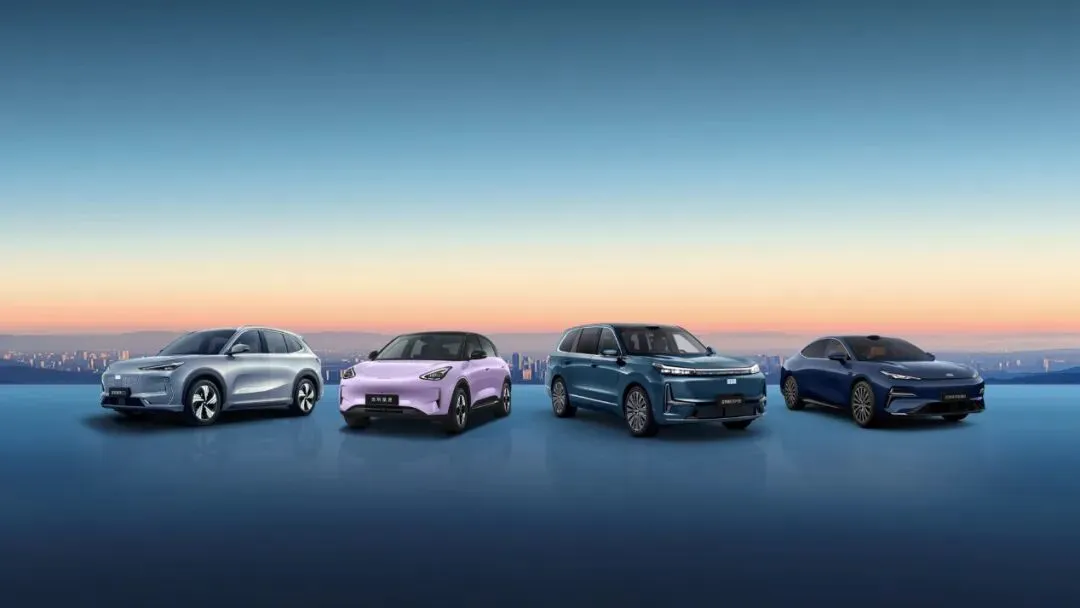
From a brand structure perspective, Geely Brand contributed 2.45 million units in sales, up 47% year-on-year, with the Geely Galaxy series consistently delivering blockbuster models, driving overall sales higher. Galaxy reached 1.24 million units, a remarkable 150% year-on-year surge, becoming the fastest product lineup in the industry to surpass one million units. Lynk & Co recorded sales of 350,000 units, a 23% year-on-year increase, maintaining its share of the mid-range market. Zeekr sold 224,000 units, maintaining its leading position in the pure electric vehicle segment.
Over the past two years, while some automakers focused solely on sales volume, Geely has been competing on both volume and structure. This structural advantage in sales volume is inseparable from its top-level strategic adjustments, which I believe is even more noteworthy than the financial report itself.
Revenue also reached a historic high, totaling RMB 345.232 billion, a 25% increase year-on-year. It's worth noting that this revenue growth stemmed not only from a significant increase in vehicle sales but also from product mix upgrades that optimized average pricing. Simply put, the Galaxy series has driven the premiumization of the Geely Brand, while Lynk & Co and Zeekr have driven the premiumization of Geely Automobile as a whole. The increased share of high-end and new energy models has offset the impact of price wars on per-vehicle revenue. Examining other companies' financial reports reveals that many brands are struggling with either increased revenue without increased profit, or increased volume without increased revenue.
Looking at profit, full-year net profit attributable to shareholders was RMB 16.852 billion, a slight increase of 0.24% year-on-year. However, after excluding non-recurring gains and losses such as foreign exchange effects and asset impairments, the core net profit attributable to shareholders reached RMB 14.41 billion, a substantial 36% year-on-year increase. The growth rate of core profit significantly outpaced that of revenue. Some observers noted that Geely's profit was around RMB 1 billion short of expectations. The explanation is straightforward: the funds were directed toward research and development. R&D investment in the fourth quarter exceeded the single-quarter average by over RMB 1 billion, focusing on core technologies such as batteries and intelligent driving. Meanwhile, the company's selling expenses decreased. In 2025, the distribution and sales expense ratio fell to 5.9%, and the administrative expense ratio dropped to 1.9%. Other expense ratios also continued to optimize year-on-year, contributing to a 46% surge in total year-end cash to RMB 68.2 billion.
Frankly, I believe Geely's financial report exceeded my personal expectations. From a fourth-quarter perspective, these results might seem expected, but back at the beginning of 2025, few would have predicted Geely would deliver such a strong performance.
Where Do the Opportunities Lie in 2026?
Behind this impressive financial report, the question on everyone's mind is where the opportunities lie this year. Perhaps some didn't see them in Q4 2025, but can Geely still offer opportunities in 2026? The answer is yes.
During yesterday's briefing, An Conghui also mentioned the impact of the various brands under Geely Holding on the listed company. However, in my view, Geely Automobile Holdings Ltd. is the core of Geely Holding. Geely's rise began with this listed entity, and it will undoubtedly see greater development in the future. For a rapidly growing company, today's foundation becomes tomorrow's opportunity. I see two key opportunity areas for 2026: internationalization and gross margin.
Market trends in the first quarter of this year already indicate that 2026 will be a significant year for the overseas expansion of Chinese automobiles. In the past, we might have considered constraints like the international environment and brand capabilities, but this year's market has provided answers. Over the past year, Geely's international sales increased rapidly, reaching 420,000 units exported. Although the share is not yet high, the internationalization system has developed markedly. In 2026, Geely's global expansion is expected to gradually enter a harvest period. While Geely's own expectations are modest, I believe there is a clear opportunity to target 800,000 to 1 million units for the year.
The other aspect is gross margin. The overall pressure on gross margins in the automotive industry remains high. Although Geely Automobile maintained its gross margin at 16.6% for the year, up slightly by 0.1 percentage points, there is still a gap from the ideal industry level of around 20%. I am more optimistic about Geely's gross margin improvement in 2026, driven by three main factors: first, the scale effect of 2026 sales volume will further dilute fixed costs, leading to continued reduction in per-vehicle manufacturing costs; second, the product mix will be further upgraded this year, with an increased share of high-margin new energy and high-end models from brands like Zeekr; third, vertical integration of the supply chain will further enhance gross margins.
Looking at these two dimensions, Geely's profit potential for 2026 remains significant. Therefore, regarding the Hong Kong-listed company, I believe there is truly considerable room for growth. Some brokerages suggested a target price of HKD 25-30, which I find a bit high, but it reflects the prevailing confidence.
Future Development Directions
Some have noted that with such strong 2025 financial performance, the company might provide higher guidance. However, Geely's sales guidance for 2026 appears relatively conservative. I believe there are two reasons: first, the external environment in 2026 is likely to face greater uncertainty; second, Geely is also making internal adjustments to consolidate, further optimizing its sales structure to drive profitability, a process that takes time.
For 2026, Geely Automobile's sales target is 3.45 million units, a 14% year-on-year increase, with NEV sales targeted at 2.22 million units (up 32% year-on-year) and export sales targeted at 640,000 units (up 52% year-on-year). These targets clearly show Geely's commitment to optimizing its sales structure by increasing the proportion of new energy and export vehicles.
Unlike some other top automakers, Geely's brand portfolio and powertrain strategy are very balanced. Each of its brands has deep roots. Some automotive groups struggle with weak new brands, making adjustments difficult. Geely is different, and this factor precisely accelerates its sales structure optimization.
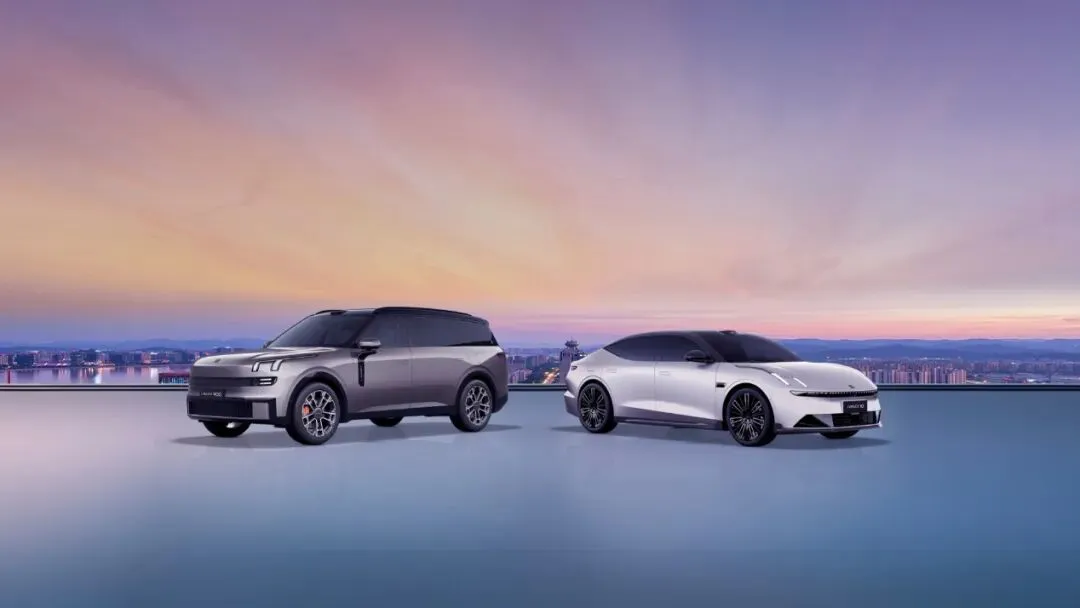
Geely Brand focuses on the mainstream market, with the Galaxy series driving the NEV base; Lynk & Co enhances mid-range value; Zeekr targets the high-end intelligent pure electric segment, boosting overall profitability. One will notice that while none of these brands are overwhelmingly large individually, none are weak—they are exceptionally balanced.
On the international front, the focus is on systemic adjustment, shifting from international trade to systemic output, leveraging strong export growth to build a second growth curve overseas, without being overly aggressive.
Geely's investment in technology is also substantial. R&D expenditure reached RMB 17.624 billion in 2025, an increase of nearly 30%.
In terms of electrification, the self-developed ShenDun Golden Battery, combined with i-HEV intelligent dual-engine technology, addresses both pure electric and hybrid market demands, supporting the increase in NEV penetration. In terms of intelligence, collaborations with NVIDIA and strategic layouts with Qianli Technology aim to build a comprehensive AI system. The Qianli浩瀚 G-ASD intelligent driving solution is expected to achieve mass production of Level 3 autonomous driving in 2026, targeting competitiveness with Tesla FSD. The new-generation Flyme Auto 2.0 cockpit system is being widely deployed, enhancing product technology premium. These are all well-known initiatives.